3 Ways Curing Affects Vanilla Aroma, Vanilla Flavor, and Vanilla Quality in Food Manufacturing
Vanilla curing is a critical process that determines how vanilla beans develop their aroma, flavor intensity, and overall quality.
Even beans from the same origin, harvested at the same time, can produce very different results depending on how they are cured. This is why curing is not just a post-harvest step, but a key factor that defines how vanilla performs in real applications.
Fresh vanilla beans are naturally green and lack the characteristic vanilla aroma and taste. These only develop after the beans undergo a controlled curing process. For this reason, curing plays a central role in determining vanilla quality and contributes significantly to consistency across batches.
From Fresh Beans to Functional Ingredient
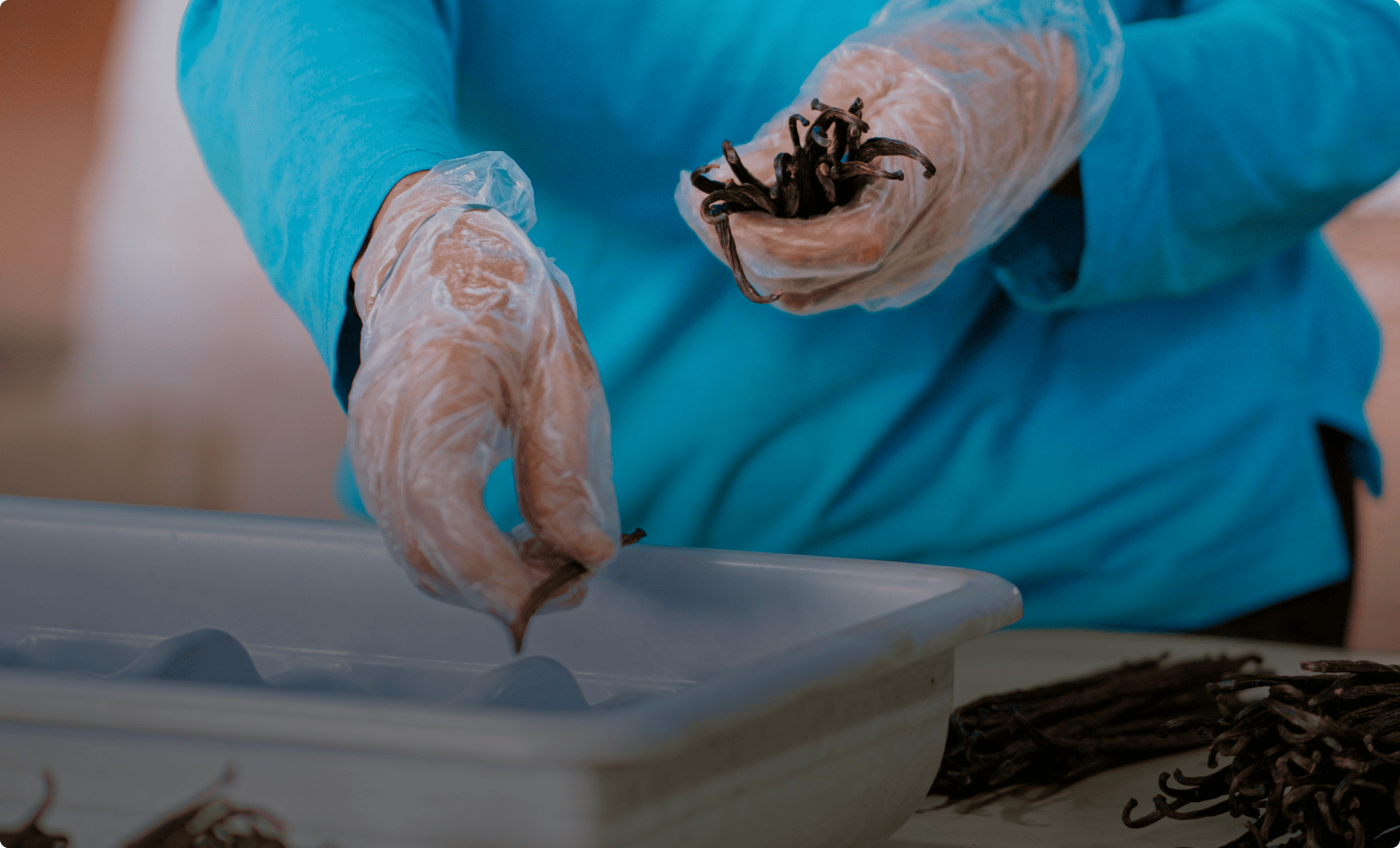
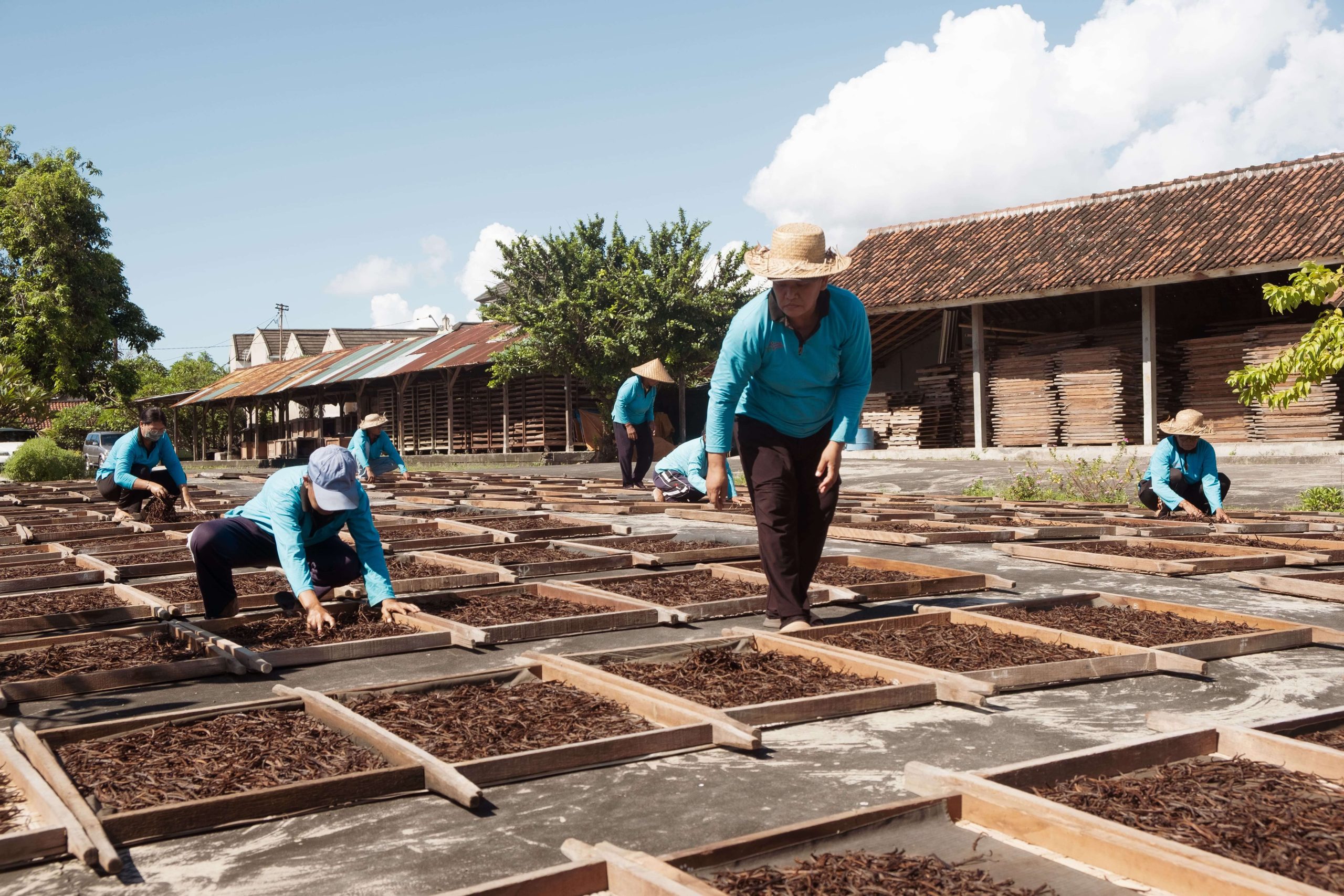
After harvesting, vanilla beans go through several stages of curing, including heating, sweating, drying, and conditioning.
During this process, enzymatic reactions convert precursor compounds such as glucovanillin into vanillin and other aroma compounds. These compounds define not only the smell of vanilla, but also how it performs in applications such as extraction, baking, and flavor formulation.
Without proper curing, vanilla beans remain underdeveloped and lack the functional properties required for industrial use.
Vanilla Aroma: Indicator of Curing Control
Aroma is one of the clearest indicators of how well vanilla has been cured.
Well-controlled curing produces a clean and balanced aroma with sweet, creamy notes. In contrast, inconsistent curing can result in flat, weak, or uneven aroma profiles.
For buyers, inconsistent aroma is often a sign of variation in curing practices, which may lead to batch-to-batch differences in final products.
Vanilla Flavor Intensity: Impact on Product Performance
Curing directly affects how strong and stable the vanilla flavor becomes during processing.
Undercured beans typically produce weak flavor with green or grassy notes, while overcured beans may develop harsh or imbalanced characteristics.
Properly cured vanilla provides a fuller and more stable flavor profile. This is especially important in applications such as bakery, dairy, and beverages, where flavor must remain noticeable after heating, mixing, or dilution.
Vanilla Quality: Understanding Different Grades and Applications
Vanilla quality cannot be generalized into a single standard, as different grades are designed for different applications.
For example, higher moisture beans, often referred to as gourmet or Grade A, are typically more flexible and visually appealing, making them suitable for whole bean applications or retail use.
Lower moisture beans, such as Grade B or Grade C, are drier and less flexible but are often preferred for extraction and industrial processing due to their stability and suitability for further processing.
Rather than indicating “better” or “worse” quality, these differences reflect how the beans have been cured and prepared for specific uses. For buyers, the key consideration is selecting the right grade based on application requirements, processing conditions, and desired performance.
Impact on Different Applications
Curing affects how vanilla performs across different applications.
In bakery, properly cured vanilla supports better flavor retention during high-temperature processing. In dairy and ice cream, it contributes to a smoother and more balanced flavor profile.
For extraction and flavor manufacturing, well-cured beans provide better availability of aroma compounds, supporting more efficient extraction and consistent output.
Inconsistent curing, however, can lead to variations in flavor strength and processing results, which may affect final product quality.
Why Curing Matters in Sourcing Decisions
Curing is not only a quality factor but also a sourcing risk factor.
Differences in curing practices can lead to variation in aroma, moisture levels, and performance. These variations may result in inconsistent production outcomes, reformulation challenges, or quality control issues.
Understanding how vanilla is cured allows buyers to better evaluate suppliers and reduce the risk of inconsistency in finished products.
What Buyers Should Look For
When sourcing vanilla, buyers should assess:
- Consistency of aroma across batches
- Bean flexibility and moisture balance
- Presence of natural surface oil
- Stability of flavor in application testing
These indicators provide practical insight into how well the beans have been cured and how they are likely to perform in production.
Vanilla Beans Curing at Rendah Vanilla
Curing defines how vanilla develops its aroma, flavor intensity, and overall quality. More importantly, it determines how consistently vanilla performs in real manufacturing conditions.
For businesses in food manufacturing, bakery, dairy, extraction, and flavor industries, selecting the right type of cured vanilla is essential to achieving stable and reliable product outcomes.

At Rendah Vanilla, we apply a controlled and consistent curing process with carefully managed timing at each stage, ensuring stable aroma development, balanced moisture, and reliable performance across batches. This approach allows us to deliver vanilla that meets the requirements of food manufacturing, extraction, and flavor applications.
To explore Indonesian vanilla options and find the right fit for your applications, visit www.rendahvanilla.com.