6 Factors That Influence Vanilla Bean Quality and Price
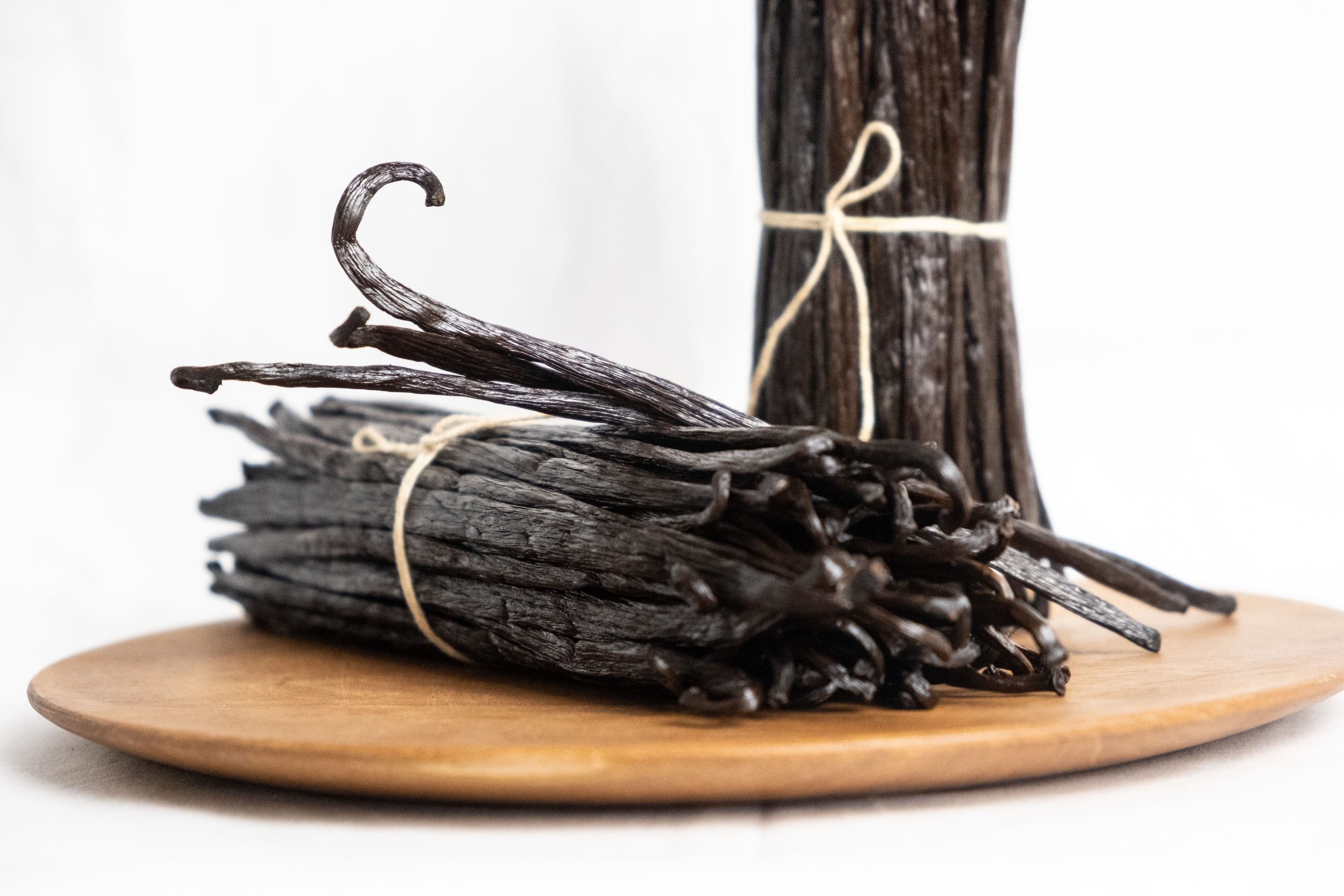
Vanilla beans are one of the world’s most valuable spices, but their price is not just simply a result of scarcity. Behind every cured vanilla bean is a long production process that requires careful cultivation, manual work, time, and attention to vanilla bean quality.
From pollinating the flowers to harvesting and curing the mature beans, vanilla production involves several stages that cannot easily be rushed or fully mechanized. Understanding these steps helps explain why high-quality vanilla beans can have higher prices than many other spices.
Pollination Requires Careful Timing
Vanilla is different from many crops because producing the pod requires successful pollination of the flower.
Vanilla flowers have a very particular pollination requirement. Outside its native Mexico, commercial Vanilla planifolia production generally relies on hand pollination.
In many commercial growing regions outside vanilla’s native range, vanilla flowers are pollinated manually. The flower has a limited period during which successful pollination can take place, so farmers need to monitor flowering closely and perform the process at the right time.
This makes vanilla cultivation particularly labor intensive. A successful pollination is also important because without it, there is no vanilla pod to harvest later.
In other words, the production of a vanilla bean begins with a process that already requires careful human attention.
Vanilla Takes Months to Mature
Successful pollination is only the beginning. Vanilla pods need many months to develop before they are ready for harvest.
The pods gradually increase in size and continue developing on the vine. Harvesting them at the appropriate stage is important because the maturity of the green bean provides the foundation for the curing process that follows.
This long growing period means that vanilla farmers must maintain the crop for months before receiving a finished harvest.
Unlike ingredients that can move relatively quickly from planting to harvest, vanilla requires a long production cycle before processing even begins.
Harvesting Is More Than Picking the Pods
Vanilla harvesting requires attention to maturity rather than simply collecting every pod at the same time.
Green vanilla beans develop at different rates, so the harvest needs to be monitored carefully. Beans harvested at an unsuitable stage may not provide the same foundation for curing as properly mature beans.
After months of cultivation, the timing of harvest therefore becomes another important quality consideration.
For producers, this means harvesting is not simply the final step of cultivation. It is the point where the condition of the green bean determines what can be achieved during curing.
Curing Transforms the Green Bean
A freshly harvested green vanilla bean is very different from the dark, flexible and aromatic bean used in food applications.
The green beans need to undergo curing, traditionally involving stages such as killing, sweating, drying, and conditioning.
During this process, the beans gradually lose moisture while important changes take place that contribute to their characteristic color, aroma, texture, and flavor.
Curing therefore does much more than dry the beans. It transforms the harvested green pod into the finished vanilla bean.
The process also requires careful attention. Drying too quickly, retaining too much moisture, or failing to properly manage the beans during curing can affect the final quality.
This is why the value of a cured vanilla bean cannot be judged simply by looking at the original green pod. A significant amount of work and time goes into transforming it into a finished product.
Learn more about how vanilla bean moisture content affects quality.
Vanilla Bean Quality Specifications Affect the Final Value
Once the beans have been cured, they still need to be evaluated and sorted.
Vanilla bean quality can be evaluated through characteristics such as length, moisture, appearance, texture, aroma, flexibility, and overall condition. These characteristics can determine whether a bean is suitable for a particular specification or application.
For example, one buyer may require a particular length and moisture range, while another may prioritize aroma, appearance, or processing suitability.
This means that vanilla beans are not simply sold as one uniform product. Different specifications and quality levels can result in different values.
Vanilla Production Is Highly Labor Intensive
What makes vanilla particularly labor intensive is not just one stage of production. Human attention is required throughout the journey.
Cultivation → Pollination → Crop care → Harvesting → Curing → Sorting → Packing
Many of these steps require careful observation and cannot simply be rushed without potentially affecting quality.
By the time a vanilla bean reaches its final form, it has gone through a long process involving months of cultivation followed by detailed post-harvest work.
This combination of time, manual work, and quality control is an important part of understanding vanilla bean quality and value.
At Rendah Vanilla, we pay attention to these stages from sourcing and curing through sorting and preparation, with the goal of maintaining consistent quality across our Indonesian vanilla beans.
Explore our Indonesian vanilla beans or contact our team to learn more about our products and processing.