5 Essential Facts About Vanilla Flower Pollination: Why Hand Pollination Matters
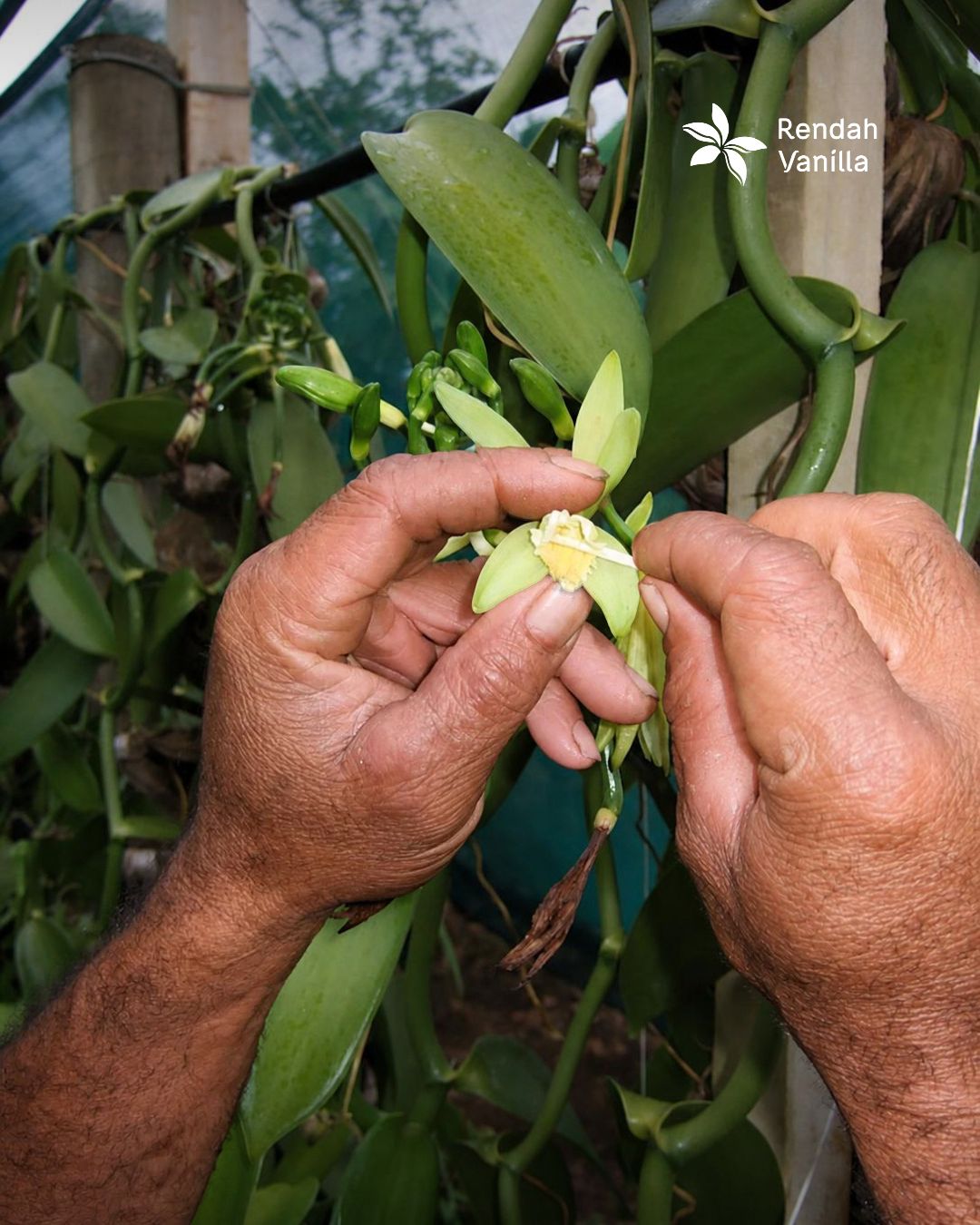
Vanilla is widely recognised for its distinctive aroma, but producing a vanilla bean begins with a much less familiar process: vanilla flower pollination. The flower may remain open for only a single day, making the timing of pollination especially important.
Successful fruit development generally depends on human intervention. Growers carefully pollinate individual flowers to help them develop into green pods that will later be harvested and cured. This makes vanilla flower pollination a crucial step in producing the pods used to make cured vanilla beans.
Vanilla Flower Pollination Has a Very Short Window
One of the most remarkable facts about vanilla flower pollination is how little time growers have to act.
A Vanilla planifolia flower typically opens in the morning and remains open for only a short period, usually less than a day. Its reproductive parts are accessible for only part of that time, making the timing of pollination essential.
Growers need to inspect their plants regularly during the flowering season and identify newly opened flowers. Missing this short window can mean losing the opportunity for that flower to develop into a pod.
This creates a distinctive rhythm in vanilla cultivation. Rather than completing pollination in a single operation, growers must return to the plants frequently while new flowers are opening.
The Flower Has a Natural Barrier That Makes Hand Pollination Necessary
Vanilla flowers contain both male and female reproductive parts, but their arrangement makes natural pollination difficult.
The pollen-bearing anther is separated from the stigma, the surface that receives pollen, by a small structure called the rostellum. This barrier helps prevent pollen from reaching the stigma without assistance.
During hand pollination of vanilla, a grower carefully lifts the rostellum and presses the anther against the stigma. This transfers the pollen and allows fertilisation to proceed.
The technique is delicate, but it does not require complex machinery. Instead, it relies on careful observation, precise timing, and practice.
Although vanilla is an orchid, its flowers do not consistently receive effective natural pollination under commercial growing conditions. The combination of flower structure and limited natural pollination makes manual intervention important for reliable pod production.
Successful Vanilla Flower Pollination Begins the Development of Vanilla Beans
Pollination is not the final step in producing a vanilla bean. It is the beginning of a much longer process.
After successful pollination and fertilisation, the flower begins developing into a green vanilla pod. The pod then grows over several months before reaching maturity and becoming ready for harvest.
The green pod is still very different from the dark, aromatic vanilla bean familiar to food manufacturers and consumers. Its characteristic aroma develops primarily during curing, through a series of processes involving heat, moisture management, enzymatic activity, and other changes within the pod.
This distinction matters because vanilla production involves several connected stages. Vanilla flower pollination enables pod development, while cultivation, harvest timing, and curing help determine the characteristics of the finished ingredient.
A well-developed pod is an important starting point, but the quality of cured vanilla cannot be judged by pollination alone.
Hand Pollination Is an Important Part of the Vanilla Supply Chain
Because vanilla flowers must be pollinated individually, cultivation requires regular attention and considerable manual work during the flowering season.
The number of flowers that develop into pods influences the potential harvest. However, the final quantity of usable vanilla also depends on other factors, including pod maturity, growing conditions, losses before harvest, and the outcomes of curing and processing.
This helps explain why vanilla production cannot be understood simply by counting the number of plants on a farm. The flowering season, availability of skilled labour, successful pollination, and subsequent crop management all contribute to the eventual supply of green vanilla pods.
From Vanilla Flower Pollination to a Valuable Ingredient
Vanilla flower pollination is a small but essential part of a much longer production journey. Each flower has a limited opportunity to be pollinated, and careful human intervention helps growers achieve more reliable pod development.
The green pods that follow still need time to mature, followed by harvesting and curing to develop the familiar characteristics of vanilla. Every stage contributes to the journey from a flowering vine to the ingredient used in food, beverages, and fragrance applications.
At Rendah Vanilla, we work with Indonesian vanilla through processing and preparation for different ingredient applications. Understanding how vanilla begins in the field helps us appreciate the care involved long before the beans reach the processing stage.
Explore our Indonesian vanilla beans to learn more about the ingredient and its journey from cultivation to processing or contact our team to discuss your requirment.