Vanilla Bean Crystals: 5 Fascinating Facts About Why They Form
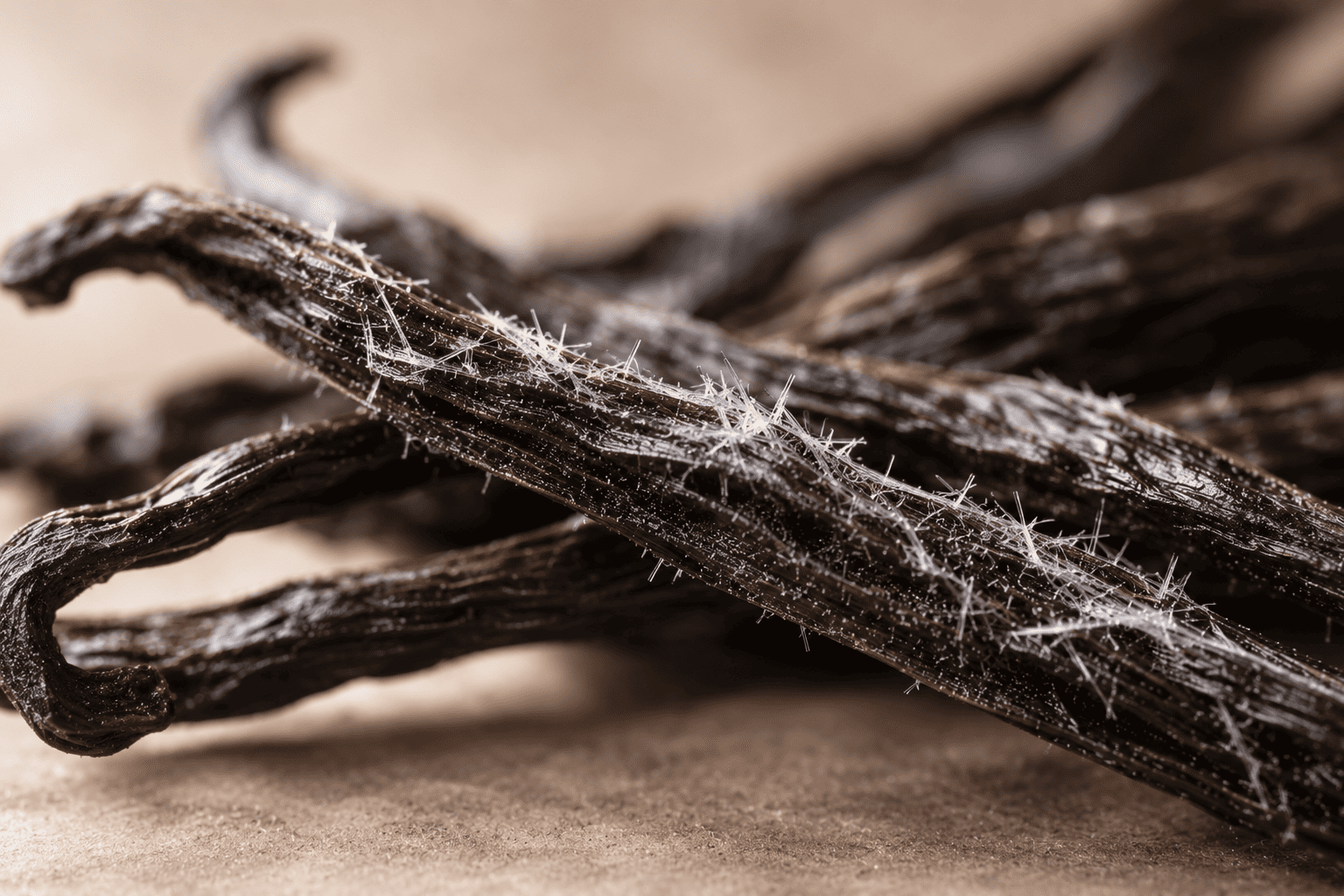
Vanilla bean crystals can sometimes appear as tiny white marks or needle-like deposits on the surface of cured vanilla beans. They can raise questions: are they a sign of good vanilla, a result of storage, or something to be concerned about?
In many cases, these white deposits are crystallized vanillin, one of the main aroma compounds in vanilla. This phenomenon is sometimes called vanilla frost or givre. Understanding vanilla bean crystals helps explain why they form and why they are often associated with high-quality vanilla beans.
What Are the White Crystals on Vanilla Beans?
The white deposits found on some cured vanilla beans may be crystals of vanillin. Vanillin is the best-known aroma compound in vanilla and contributes to its familiar sweet, warm fragrance.
In its pure form, vanillin is a white crystalline solid. It can form short, white, needle-like crystals on the surface of cured pods. This surface deposit is commonly known as givre de vanille, or vanilla frost.
Vanilla bean crystals are therefore not a sign of spoilage. They form when vanillin crystallizes on the bean surface.
Why Does Vanillin Crystallize on Vanilla Beans?
Vanilla beans contain vanillin as part of a complex mixture of natural compounds. After curing, vanillin is present in the beans and contributes to their characteristic aroma.
When the vanillin concentration is sufficiently high, some of it can crystallize and become visible on the surface of cured pods. This is why vanilla bean crystals are often associated with beans containing a high concentration of vanillin.
The appearance of these crystals is commonly regarded as a desirable characteristic in high-quality vanilla beans. They may develop after curing and during subsequent storage, although not every bean will form visible crystals.
The amount and appearance of vanilla bean crystals can vary depending on the characteristics of the beans and the conditions under which crystallization occurs.
What Factors Influence Crystal Formation?
The formation of vanilla bean crystals is a natural process in which vanillin changes from a dissolved state into a solid crystalline form.
Several factors can influence this process:
Vanillin concentration: The amount of vanillin present in the beans is an important factor. A higher concentration provides more vanillin that may become available for crystallization.
Moisture content: The moisture condition of cured vanilla beans can influence the physical state of vanillin and its ability to crystallize.
Temperature: Temperature can influence how compounds behave and whether they remain dissolved or form crystals.
Time after curing: Crystals may become visible after the beans have been stored for a period of time. Their formation does not necessarily happen immediately after curing.
These factors help explain why vanilla bean crystals may appear on some cured beans but not others. Their presence is often associated with high vanillin content, although the absence of visible crystals does not necessarily indicate lower quality.
Vanilla Crystals or Mould: How Can You Tell the Difference?
It is important to understand vanilla bean crystals because white deposits can be mistaken for mould.
Although both may appear white, they are not the same. Vanillin crystals are solid deposits, often described in scientific literature as short, needle-like structures. Mould is fungal growth and may appear fuzzy, cotton-like, or irregular.
A few observations may help:
- Texture: Crystals tend to look more defined or granular, while mould may appear soft or fuzzy.
- Appearance: Crystalline deposits may have a sharper, more structured appearance. Mould can spread in irregular patches.
- Odour and condition: An unusual musty smell, visible deterioration, or suspicious growth should not be ignored.
These observations are not a food-safety test. Colour alone cannot confirm whether a deposit is vanillin or mould. If you cannot confidently identify the substance, keep the bean separate and do not use it until it has been properly assessed. Do not simply scrape off suspicious growth and assume the bean is safe.
Do White Crystals Mean the Vanilla Beans Are High Quality?
Visible vanilla bean crystals indicate that vanillin has crystallized at the surface.
Because vanillin is an important aroma compound in vanilla, its crystallization is often considered a desirable characteristic. However, vanilla bean crystals should not be treated as the only measure of quality.
A vanilla bean’s overall condition depends on more than its visible vanillin deposits. Aroma, moisture, texture, cleanliness, physical condition, and storage history also matter.
A bean with visible crystals may have a high vanillin concentration, but a bean without visible crystals is not necessarily inferior. A complete assessment considers the whole bean. Laboratory analysis can measure vanillin, while visual and sensory checks provide other useful information.
Understanding White Crystals on Vanilla Beans
Vanilla bean crystals are the result of vanillin forming visible crystalline deposits on the surface of cured pods. Known as vanilla frost or givre, they are a recognised feature of vanilla and are often associated with high vanillin content and desirable bean characteristics.
However, crystals should be considered alongside other quality indicators, including aroma, moisture content, physical condition, and storage history.
Explore our Indonesian vanilla beans or contact our team to learn more about vanilla characteristics and specifications.