3 Vanilla Bean Grades and How Food Manufacturers Should Choose
For food manufacturers, flavor houses, and ingredient buyers, sourcing vanilla beans is rarely as simple as ordering “vanilla.” Vanilla beans are sorted into grades, and each grade is suited to a different stage of production. Understanding these grades helps procurement teams specify the right input, avoid overpaying for qualities they do not need, and communicate clearly with suppliers.
This guide explains the three primary vanilla bean grades, what distinguishes them, and how manufacturers typically match each grade to a specific application.
Understanding Vanilla Bean Grades
Vanilla bean grading is based on measurable physical characteristics, primarily moisture content, length, and visual condition. It is not a ranking of overall quality. A premium-grade bean and a lower-grade bean can come from the same harvest and the same farm; the difference lies in how each bean was sorted after curing, based on what each bean is best suited to do.
This distinction matters for buyers. A manufacturer producing vanilla extract does not need the same bean as a bakery that wants visible vanilla bean specks in a finished product. Choosing a grade is therefore a sourcing decision, not a quality judgment.
Grade A: Higher Moisture, Suited to Visual and Whole-Bean Use
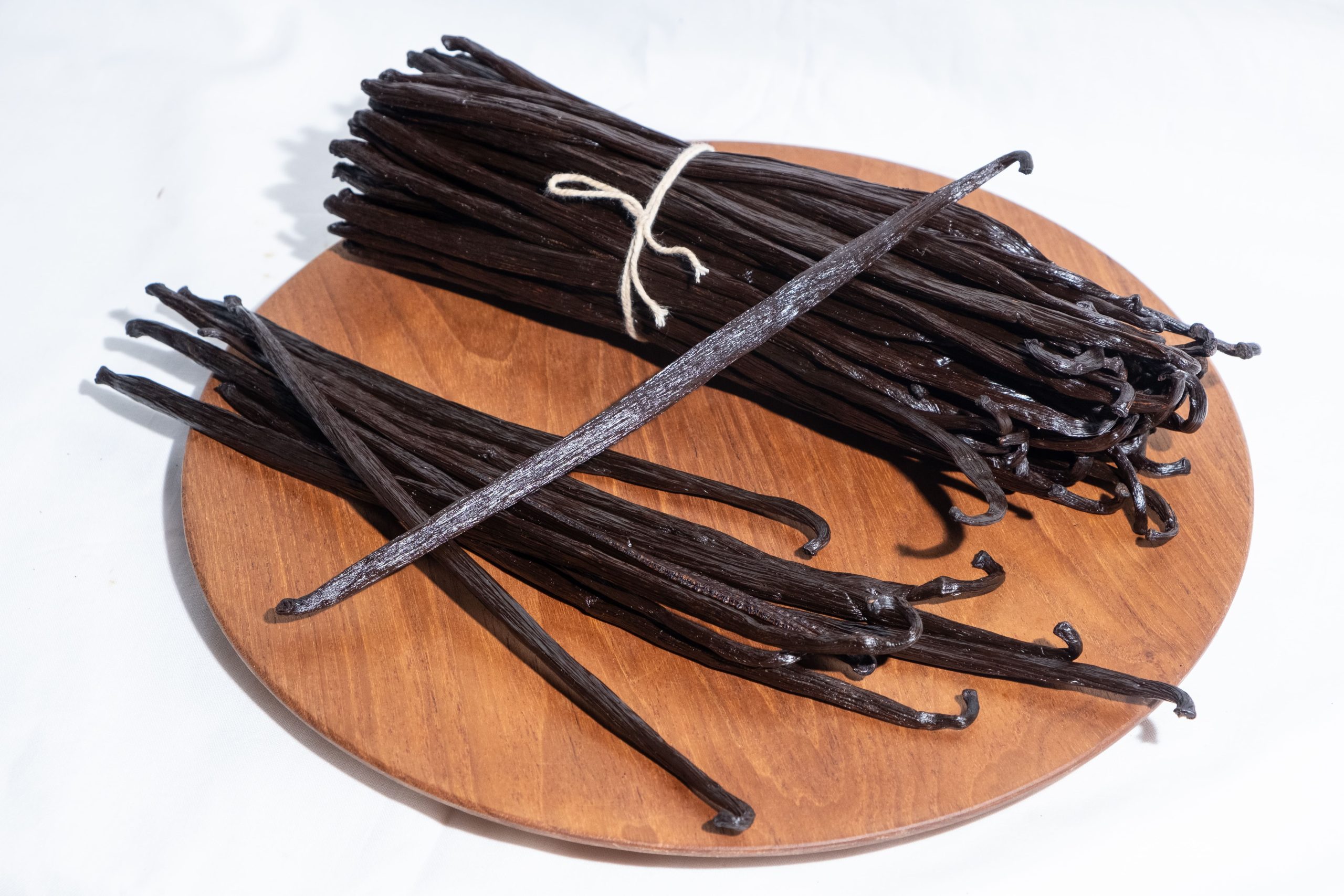
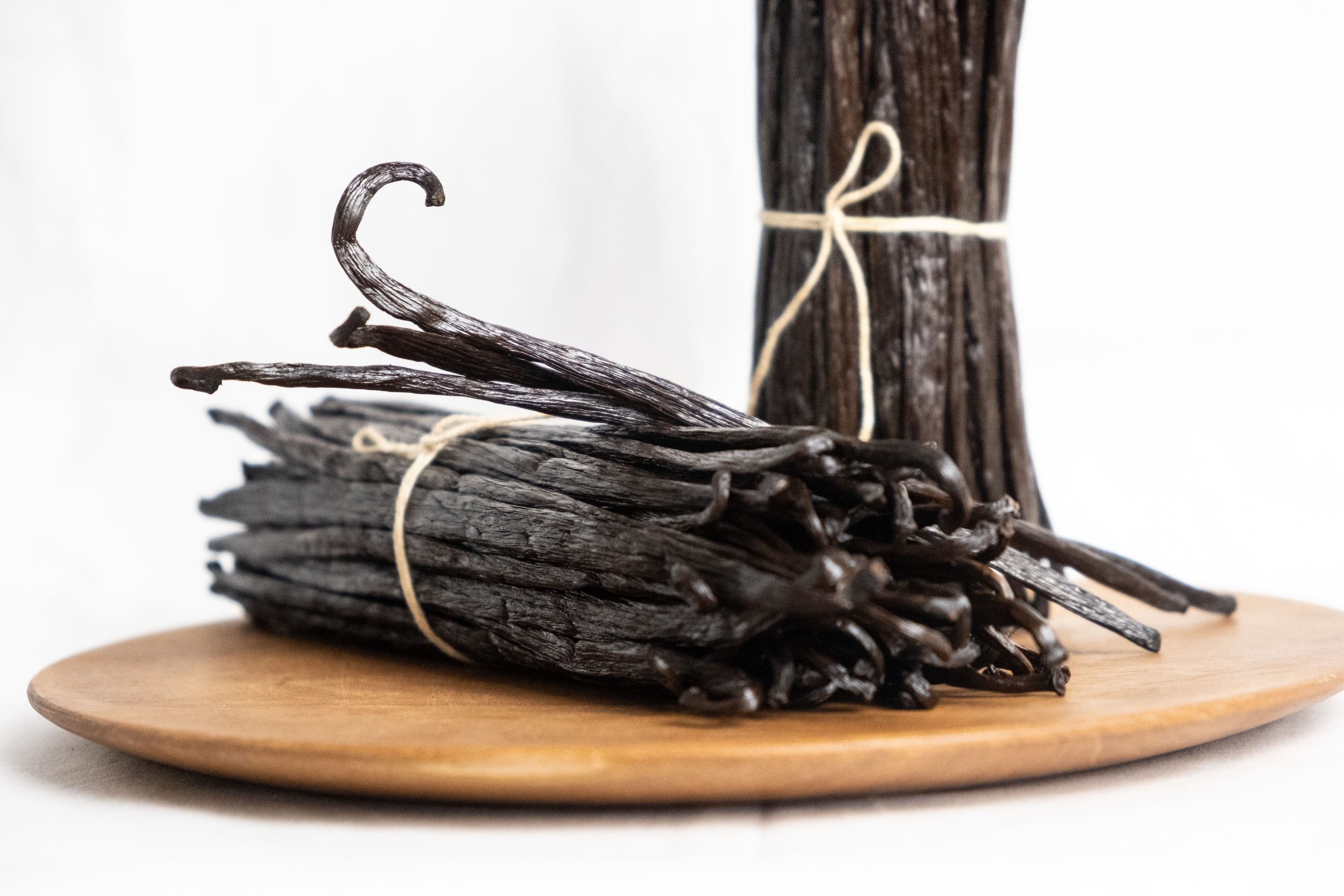
Grade A vanilla beans, sometimes called gourmet beans, typically have a moisture content of around 25 to 35 percent. This higher moisture level makes the beans supple, plump, and easy to split open, with seeds that scrape out cleanly. High-quality Grade A beans are known for their rich aroma, slight natural oily sheen, and uniform appearance, making them ideal for applications where both flavor and presentation matter.
Because of this, Grade A beans are commonly used where the bean itself is part of the final product experience, such as:
- Premium ice cream and dairy desserts, where visible vanilla bean specks signal authenticity
- Bakery items where whole beans or seeds are used directly in the formulation
- Products marketed around clean-label or “real vanilla bean” positioning
Grade A beans are generally priced higher, reflecting the additional sorting and handling required to preserve their appearance and moisture during storage and transport.
Grade B: Lower Moisture, Suited to Extraction
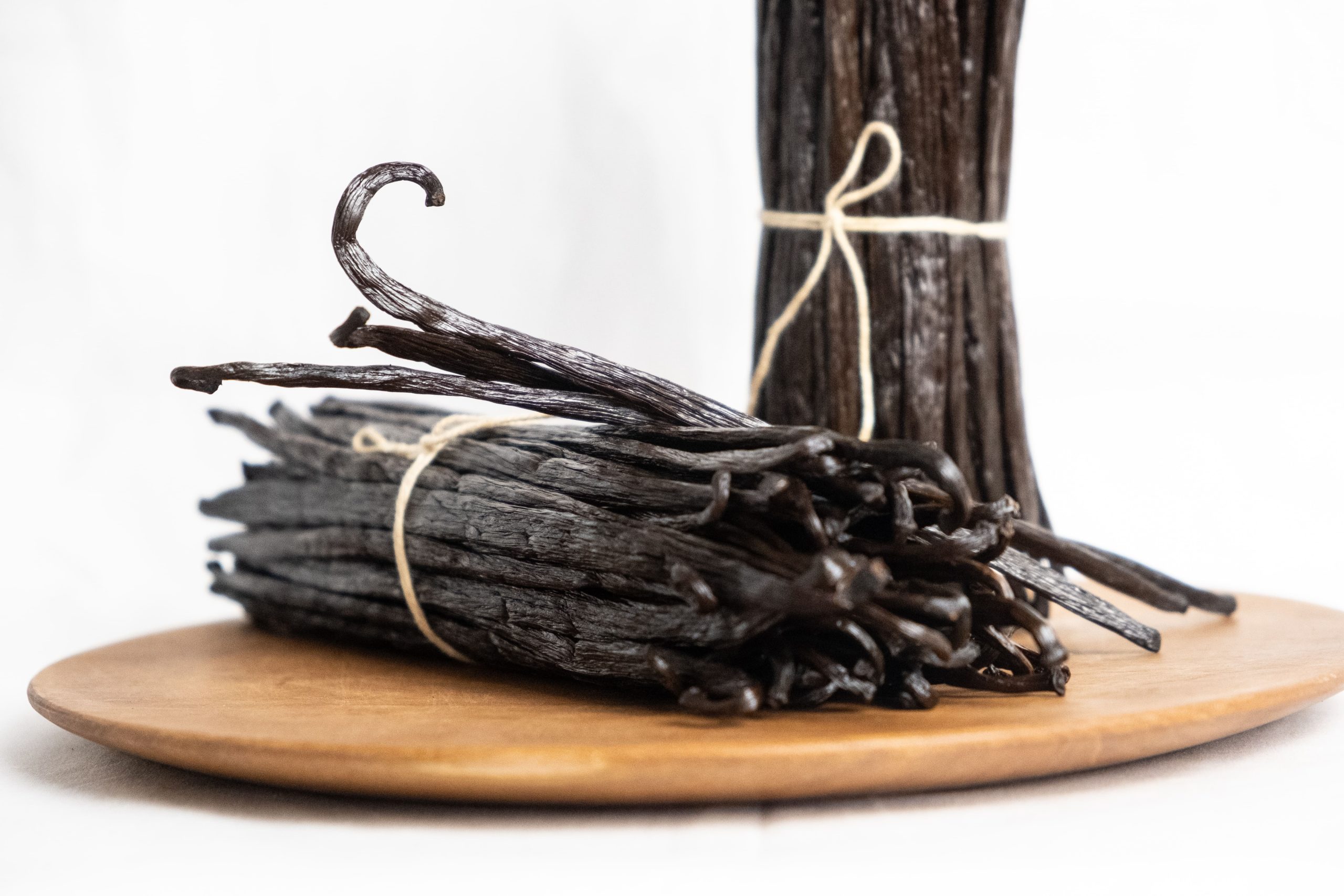
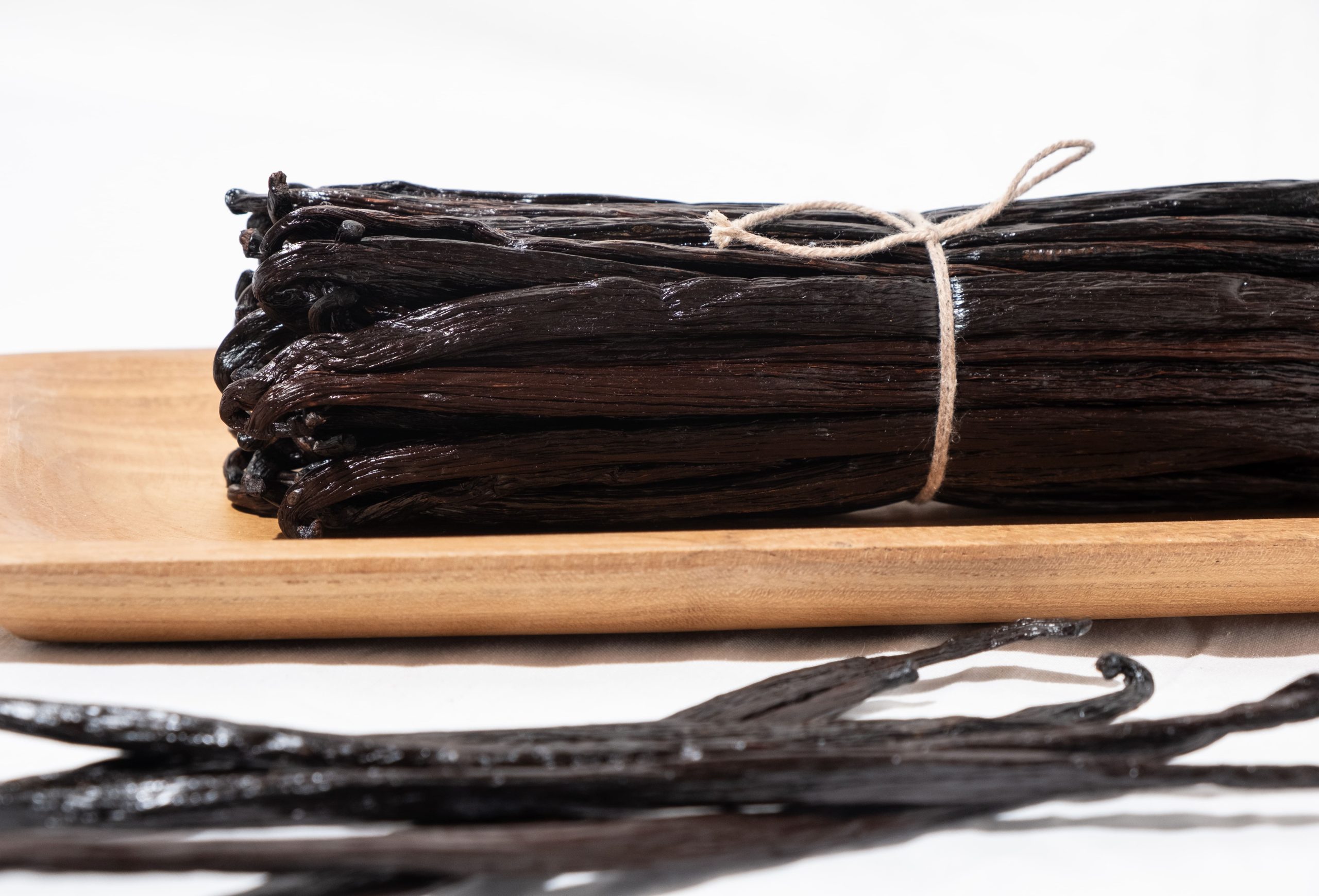
Grade B vanilla beans have a lower moisture content, typically in the range of 24 to 28 percent. They are drier and less visually uniform than Grade A beans, often appearing more wrinkled or reddish-brown. This is expected and does not indicate lower quality.
What makes Grade B beans valuable to manufacturers is concentration. With less water content, the flavor compounds are more concentrated relative to the bean’s weight, which makes Grade B the standard choice for:
- Vanilla extract production
- Large-batch flavor infusions
- Manufacturing processes where the bean is steeped or processed rather than used whole
Most commercial vanilla extract on the market today is produced using Grade B beans, since extraction processes are designed to draw out concentrated flavor compounds rather than preserve visual appearance.
Grade C: Lower Moisture, Suited to Industrial-Scale Processing
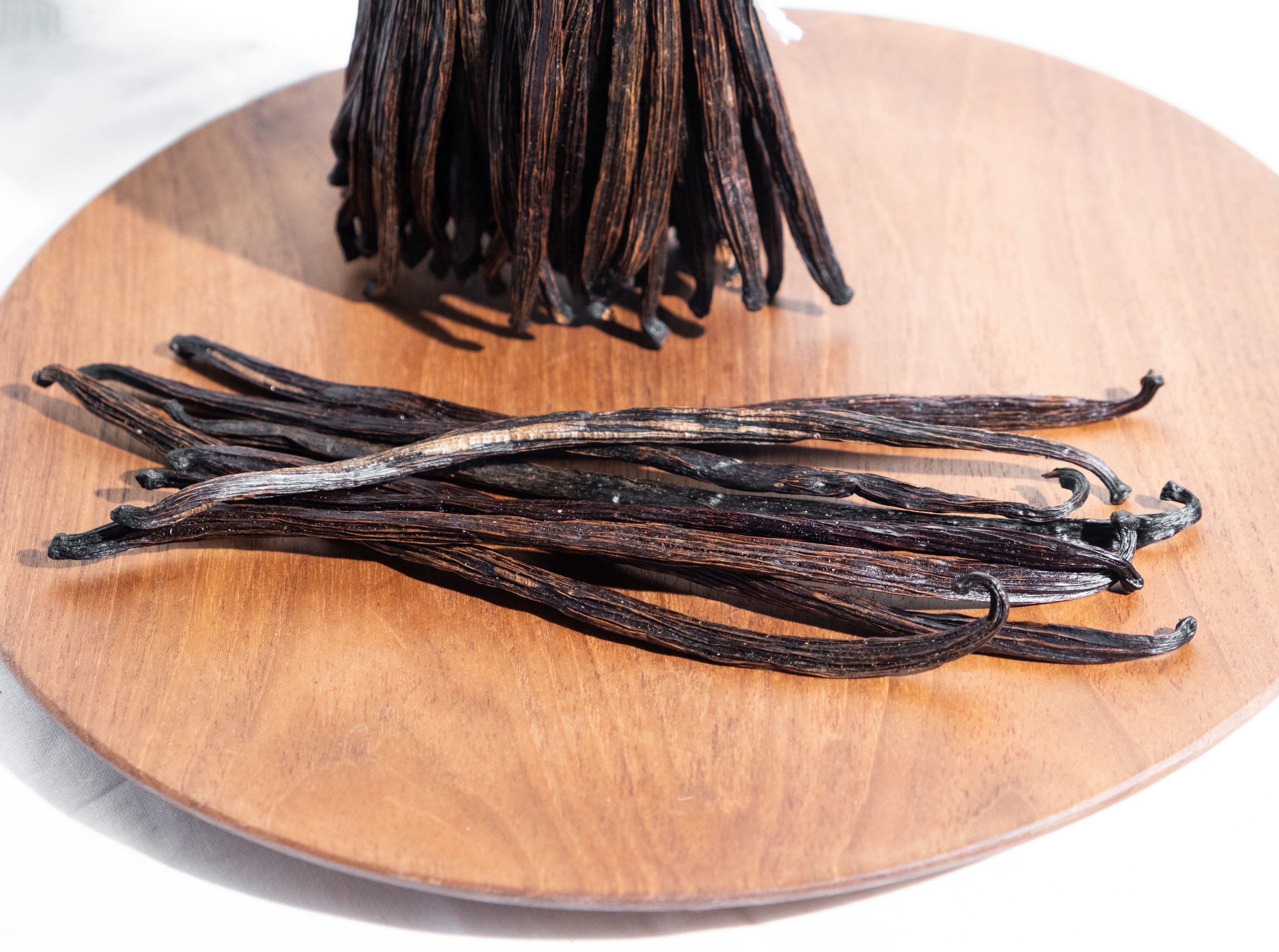
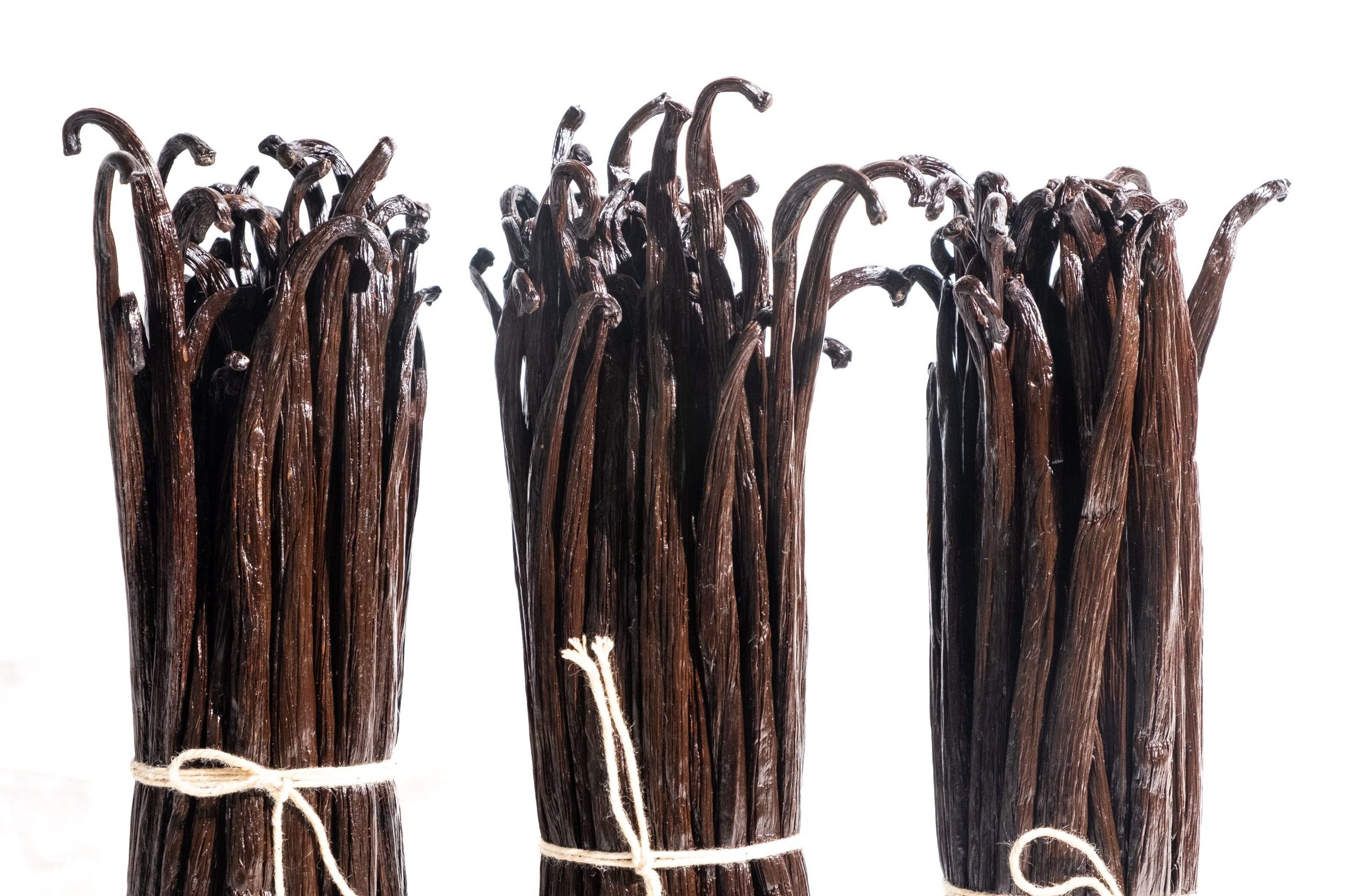
Grade C vanilla beans have the lowest moisture content of the three grades, generally in the range of 18 to 25 percent. They are slightly drier and less oily than Grade A or B beans, and appearance is not a priority at this grade.
Grade C beans are typically used by manufacturers operating at industrial scale who need a cost-efficient, fully natural input for high-volume production, such as:
- Bulk vanilla flavoring used across large product lines
- Lower-cost natural vanilla products where visual bean quality is not a factor
- Blended or compounded flavor production where vanilla is one of several inputs
For manufacturers prioritizing cost efficiency while keeping a formulation naturally sourced, Grade C offers a practical entry point without requiring synthetic alternatives.
Cuts: Fragmented Beans Suited to High-Volume Extraction
Cuts refer to vanilla beans that are too short to be classified as whole beans under Grade A, B, or C standards. Because appearance and length are not relevant at this stage, cuts are used almost exclusively in processing applications where the bean is fully steeped, ground, or extracted rather than handled whole, such as:
- High-volume vanilla extract production where whole-bean form is not required
- Ground vanilla powder production
- Industrial flavoring processes where cost efficiency is the primary consideration
Cuts are typically the most cost-efficient natural vanilla input available, making them a practical choice for manufacturers who need fully natural sourcing at the highest volumes and lowest cost per unit weight.
How Moisture Content and Vanillin Relate Across Grades
The table below summarizes how the three grades typically compare. These ranges can vary slightly by origin and harvest.
| Grade | Moisture Content | Typical Appearance | Common Use |
Grade A | 25 – 35% | Rich in Oil, plump, glossy, dark brown to black | Whole-bean use, visible specks, premium dairy and bakery |
Grade B | 24 – 28% | Oily, supple, brown to dark brown | Vanilla extract and large-batch infusion |
Grade C | 18 – 25% | Drier, brown to reddish | Industrial-scale, cost-efficient natural flavoring |
| Cuts | 15 – 25% | Dry, short, brown to reddish | High-volume extraction, ground powder, industrial flavoring |
A Note on Grading Standard: Vanilla bean grading is not universally standardized. Terms such as Grade A, Grade B, and Grade C may carry different moisture ranges, length requirements, or quality thresholds depending on the country of origin or the supplier’s internal classification system. Buyers are advised to confirm the specific grading specifications with their supplier before making a sourcing decision.
It is worth noting that vanillin concentration does not move in a single fixed direction across these grades. Vanillin content is influenced by curing practices and bean origin as much as by moisture-based grade.
Choosing the Right Grade for Your Application
For procurement teams, the decision generally comes down to what the vanilla needs to do in the final product:
- If the product needs visible vanilla bean specks or whole beans as part of its identity, Grade A is the appropriate starting point.
- If the goal is producing vanilla extract or a concentrated flavor infusion, Grade B is the standard industry choice.
- If the priority is cost-efficient, natural vanilla flavoring at industrial volume, Grade C or Cuts are typically the better fit.
None of these grades is inherently superior to the others. The right choice depends entirely on the manufacturing process and the final product requirements.
Explore Vanilla with Us
Behind every vanilla bean grade is a carefully managed supply chain that begins long before curing takes place. Rendah Vanilla works directly with farming communities across Indonesia and oversees key post-harvest processes, including curing, grading, and quality selection, to support consistent material across every grade.
Explore more about Indonesian vanilla, or get in touch with the team